Wednesday, May 30, 2012

Side Dish: Kansas Underground Salt Museum 5/27/12

For most Americans, Memorial Day weekend means cookouts, Frisbees in the park, and perhaps an amusement park or two. As the official kickoff to the summer season, it is packed to the gills with family, friends, food, and fireworks. And while the rest of the country is munching on hot dogs and, if need be, paying respect to military veterans, the Cales are immersed in salt. No, not the kind sprinkled on holiday fare, but rather the unprocessed variety found deep under the ground. It surrounds us, from ceiling to floor, and while we could sneak a lick or two if the mood was right, we are encouraged not to, given the unavoidable fact that yes, a miner just might have taken a leak on the very spot where your tongue now resides. We are in the Underground Salt Museum in Hutchinson, Kansas, and while that sounds like no sane way to spend a day off, such a visit is right in our wheelhouse. You see, we’re fond of the odd and the bizarre, and by all accounts, so are a great deal of Kansans. The place is packed; so packed, in fact, that reservations are strongly encouraged. It seems that we just can’t get enough of that wonderful sodium chloride.
It sounds sick and twisted in the telling, but visiting the Salt Museum has been a dream of ours for at least a year. Well, dream might be pushing credibility just a bit, but no fewer than three road trips had been planned with the salt palace as a centerpiece. Maybe we’re fixated on the idea that in America, we’re apt to celebrate just about anything short of mass murder, but more than likely, we search out any activity that requires us to put on a silly hard hat. Yes, the Underground Salt Museum is exactly the sort of place where, against all common sense, visitors are treated to a “safety video”, which describes alleged dangers that haven’t actually existed for decades. No one’s going to perish after a run-in with salt, but keep your arms and legs inside the train. Salt does not emit anything even remotely lethal, but please, strap on your breathing apparatus just in case the walls ooze with carbon monoxide. This is not, we’ll all admit, a coal mine, but there’s something exciting about pretending that within moments, all of us might rush the elevator in a panic as death taps our shoulders from behind. Fully frightened for no reason whatsoever, we head to the double-deck hoist for our journey into the nether regions of the Kansas prairie.
After a pitch-black descent (650 feet down, to be exact), we tumble forth with child-like glee, anxious for our two hour salt experience. Much of the tour is self-guided, with panels and videos describing the mining process. At first glance, the long caverns appear mysterious and full of fright, but one soon realizes that nothing bad could ever happen in a place housing a gift shop. This is salt, not the last stand of the zombie apocalypse. The area in question was once a Permian Sea, bringing us to the point where salt was plentiful and just begging to be mined. The best part of the early sections was the “blast zone”, where visitors get a sense of all the drilling, cutting, and blasting required to get the good stuff out of the earth. According to the video, “250 tons of rock salt are secured for every 40 feet of wall blasted.” Crushers reduce the rubble to a manageable size, and, since 1983, conveyor belts have brought everything to the surface for refining, kiln drying, storage, and ultimately, transport. Sure, everything appears to be sheer company propaganda in service of Carey Salt, but ask yourself – what have they to gain by convincing the public that salt is a good thing? As this is far from a dangerous form of mining, one can assume that no one is covering up the death and decay brought forth by the American salt lobby. And this is industrial salt we’re talking about here – none of what you see before you will make it to your kitchen table.
If you’re feeling generous and wish to spend $18 apiece, you can experience both the train (Salt Mine Express) and Dark Ride, even though they’re both covering largely the same ground. Sure, the Dark Ride is more spontaneous in that the tram isn’t tied to a track, but if you have to sacrifice one for the sake of savings, well, this isn’t Sophie’s Choice we’re talking about. I preferred the Dark Ride, as the commentary came from a live human being, and she had all the personality the train’s recorded chatter lacked. In fact, the train’s audio was downright obnoxious, with a narrator so desperate for unearned laughs that he paused to allow the din to die to a dull roar. Needless to say, our group was painfully silent. Each experience fleshed out the life of a miner, and how everything brought down to the mine must stay in the mine, as it’s always more expensive to bring it up than simply leave it be. As such, visitors can see numerous pieces of old equipment, including cars that ran on electricity, given the understandable avoidance of gas-powered engines in a closed, ventilation-free environment. Above all, though, we learned about human waste and how it will remain forever locked tight; away, even, from prying eyes and the hot Kansas sun.
For us film buffs, there’s the added attraction of seeing thousands of boxes of film canisters and memorabilia in a special “preservation hall”. The moisture-free environment is ideal for protecting film stock, and among the riches are original reels of Gone With the Wind and The Wizard of Oz. There’s also a newspaper from the day after Lincoln’s assassination, as well as company records that wouldn’t thrill even the heartiest HR manager. Less understandable, though, is the inclusion of that hideous snowman prop from Jack Frost, a film so vile it manages to convince us that someone like Kelly Preston deserves better. And when the warehouse actually contains lost footage from 2001: A Space Odyssey, the unhealthy focus on crap like Men in Black II makes me wonder how inclusive an idea like preservation has to be. I mean, would the world grieve if the last known copy of Batman & Robin eroded away into dust? There’s plenty of room down here, so I guess the more the merrier. What they didn’t find room for, however, is a decent magnet for the obsessed tourist. What they had on hand looked home-made, and no, not in a good way. I’m not sure I would have accepted one had they been included with the price of admission. And as tempting as the “Got Salt?” t-shirts were, I settled for some free salt crystals, given away at the end of the Dark Ride like we were the Willy Wonka kids set loose in the candy factory.
So while the Underground Salt Museum is hardly Carlsbad Caverns, there’s something to be said for learning about process. Not enough of what we do explores the nature of work in America, and too often we take for granted something as deceptively simple as salt. Where it lies, how we get it, and what it takes to turn it from raw mineral to edible condiment. Or what we throw on the roads to melt away ice and snow. And it must be working, as this site was recently named one of the “8 Wonders of Kansas.” Makes you wonder what it beat out.

Tuesday, May 29, 2012

We Came, We Saw, We Missed the Bus: Tallgrass Prairie Nat'l Preserve 5/27/12

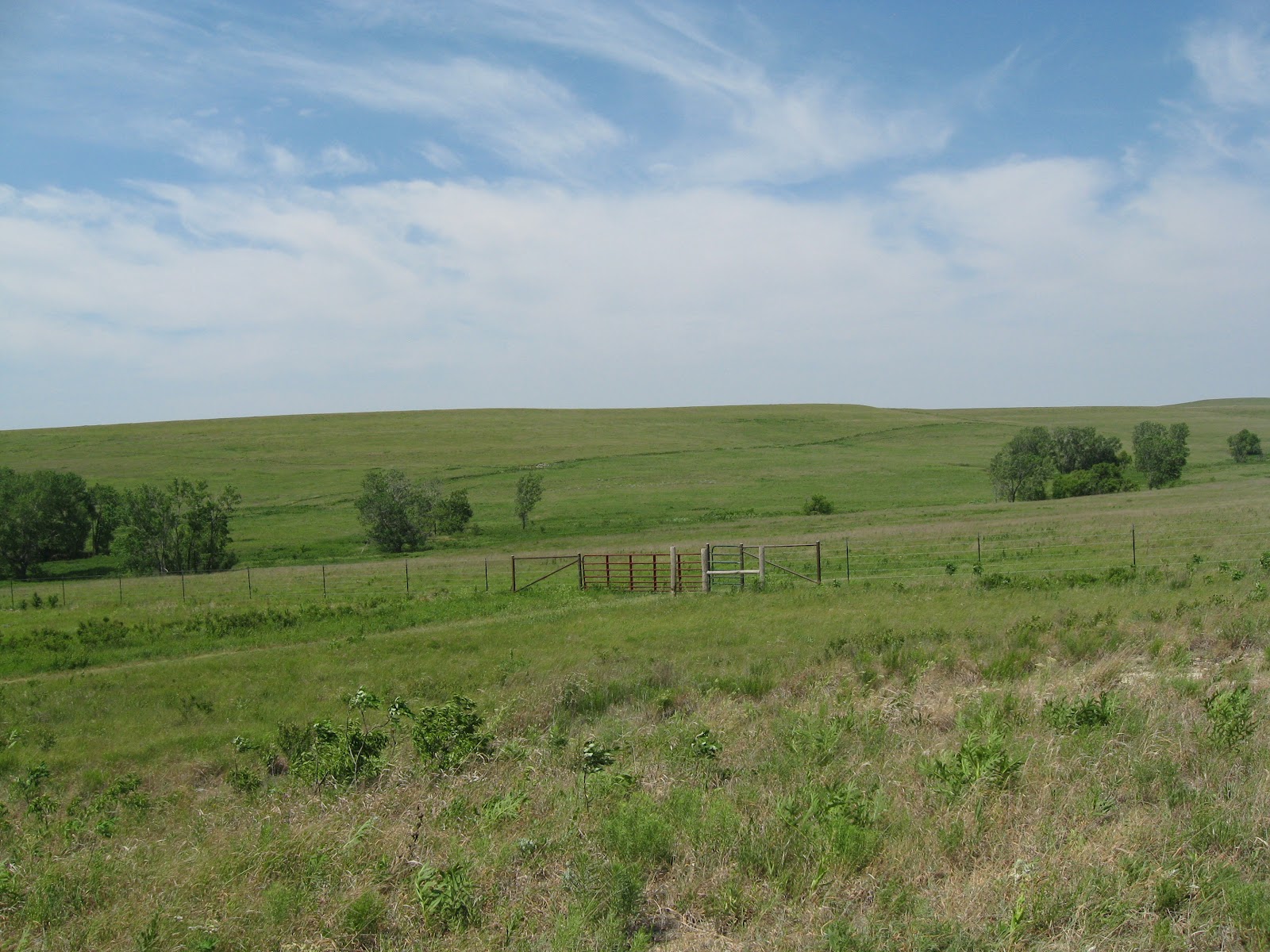
Even for the hopelessly obsessed, the prospect of a National Preserve hardly stirs the blood to a boil. Like so many, we get faint at the thought of a National Park, Monument, or Historic Site, but whenever we’re forced – either by passport stamp necessity or simple proximity – to spend time and treasure in search of a mere Preserve (the same usually holds for a Recreation Area), we cling to duty, even as we long for greener pastures and more thrilling adventures. No, a 10,984-acre patch of grass is no one’s idea of a mind-blowing vacation, but as our original plans were quite literally washed away (late May thunderstorms in Montana, who knew?), we had to suck it up and hit Kansas once again, even if it’s usually the last state on any sane person’s itinerary. But as the Tallgrass Prairie National Preserve (created in 1996) is, at this moment, the remaining 4% of what once covered 140 million acres in the Flint Hills of the Sunflower State, we figured that at the very least, we’d be face to face with a genuine rarity. I mean, I’m no fan of outhouses, but if you’re telling me that you have the very one where Jesse James shat forth his last meal, I’ll spend a small fortune to see it in the flesh. And while Tallgrass is more endangered ecosystem than historic human waste, it still holds a great deal of appeal, even if we couldn’t see most of it thanks to the single most inefficient use of rangers in the history of the NPS.
So yes, this is where the lush fields of green turn to bitterness, in case you had any doubt. While there are historic buildings at Tallgrass Prairie (the Spring Hill/Z Bar Ranch maintained a hold from 1878 until 1986), you’re here to see the vast grasses, of which there are four types: big and little bluestem, switch grass, and Indian grass. As expected, the prairie is host to a complex ecosystem of birds, plants, and other creatures, including the Greater prairie-chicken, Eastern meadowlark, coyote, and American bison. And though you can climb up into the heart of the ranch complex and see endless stretches of windswept color before you, it’s best if you leave the confines of the parking lot. If only. You see, no personal vehicles are allowed in the midst of the prairie, leaving only tour buses to flesh out the mere hints of what is available to the eye and ear. Sure, there are hikes, but the shortest one is several miles long (they run from several to no less than thirteen, and unless there’s buried treasure at the end of the rainbow, hell will never get cold enough for me to embark on that journey). This being Memorial Day weekend, I was under the impression that buses would be running non-stop, and as the crowds were ever-increasing (cars pulled up throughout our stay), it seemed reasonable to conclude that we’d be taken care of by the NPS faithful. Not on this day. There were two tours – two and only two – and having just missed the 11am bus by mere minutes, we were told that we’d have to wait until 3pm for the next one.
So without irony or the hint of a sly grin, the humorless, bastard son of a ranger told me that if I wanted to bathe in the Tallgrass, I’d have to wait four hours. This not being an amusement park, and having just explored the rest of the site in under fifteen minutes, I’m not sure how I was supposed to spend these four hours, unless I was content to watch a sound-free orientation video several hundred times. Bully for Tallgrass for building a new visitor center (before, the site had to make do with the ranch house or the barn), but if you’re going to consider it open for business, make sure you have more than, well, a sour ranger to distract tourists. The passport stamps were all in order – thank the stars – but nothing other than immaculate restrooms greeted us. And where the hell were the magnets? Nothing, in fact, was for sale, and given the potential wait (did I mention it was FOUR HOURS), the least they could have done was haul in a Ms. Pac-Man machine to pass the time. What on earth were the rangers not conducting tours doing? Making sure that no one stole the broken DVD? From what I could tell, their only job on this windy Sunday was to inform once-smiling blue hairs and cyclists that they could not see the actual Tallgrass because no one expected crowds on the busiest holiday weekend of the year. Worst of all, a shiny, freshly-washed bus was sitting right in front of the facility, mocking anyone who dared ask why it wasn’t, you know, driving through the site with fat and happy alike.
If, then, you are one of the unlucky majority who misses the bus tour, what can you do at Tallgrass Prairie National Preserve? Well, there’s a three-level limestone barn (measuring 110’ x 60’), though no ranger will be around to tell you anything about it. And then there are the corrals and fences, but no ranger to provide a clue. Next, there are outbuildings and a scratch shed, but – shocker – no rangers about. The chicken house, carriage house, curing house, and ranch house (Second Empire-style limestone mansion, built in 1881) are also available, but barring a fire you just might have to set, no one will be around to provide any facts or figures. There’s also the Lower Fox Creek School (1/2 mile walk from the ranch headquarters), but unless you care to consult the rusty swingset, good luck finding out anything about it. From all appearances, the crowds were content to wander around without guidance, but they could just as easily have been suffering from heatstroke. Odds are, the tornado-like fury of the day’s wind was blowing away what shit remained for them to give. I snapped a few photos, of course, muttered vague threats at the rangers under my breath, and then, as I reached the car, I settled down a bit. Sure, two tours a day on such a weekend was silly and grossly inefficient, but save the grass, what the hell was out there that should get me so upset? Had they transferred the Upper Geyser Basin from Yellowstone? Created a mock-up of El Capitan to compete with the birds? I didn’t have my history wrong and Lincoln was actually assassinated somewhere near Strong City, right? It’s a National Preserve, you grouch. You saw what you could, stamped your book, and moved on. Save the rage for a National Park.


FINAL RATING

4/10

Side Dish: The World's Largest Ball of Twine > Cawker City, KS 5/26/12

The front door to the Great Plains Gallery creaked and groaned with age and unsettling portent, soon followed by a distinct smell that rarely precedes the discovery of good news. Nothing inside appeared to stir, until my own heart was shocked out of its normal rhythm by the sight of a curled up figure just shy of the register. The blanketed lump, positioned ever so awkwardly in an unusually respectable chair, remained motionless for what felt like hours, until the squeaky floor betrayed my presence above her disheveled head. "Morning," she croaked, as if speaking for the first time in weeks. It was late afternoon. "Made most of these myself," she said, gesturing in the general direction of the far wall, as if stubborn pride had suddenly interrupted a life wasted.
What appeared before me was shelf after shelf of an ancient crypt keeper's single-minded devotion to Cawker City's one and only claim to fame. Items ranged from clay balls resembling oven-fired hush puppies to mini, child-proof plastic bottles housing tiny pieces of the town's treasure, forever entombed, much like this gray-topped prune in her musty tower of trinkets. A shot glass or magnet made little sense, as whatever one takes from this shuttered town on the Kansas prairie, it must bear the stamp of twine. Glorious, heartbreaking twine, now reduced to keeping the death knell at bay.
This warehouse of lost dreams, for all of its dilapidation and stark sadness, remains one of the few buildings actually open to the public in Cawker City. Main Street is, as one would expect, the epicenter of the economic tsunami, and as we snapped our photos on this wildly hot day in May, few cars stirred to life, and the sidewalks ached with a raw, all-too-typical loneliness. According to the literature, the town can and has come alive during any number of “Twine-a-Thons” or “Twine Walks” (a painted loop on the concrete reminds visitors of this very fact), but as the prairie wind whipped, little evidence remained that anyone still gave a damn. No one walked, ate, pumped gas, or tipped their cap; this was numbed, absent humanity in its purest form, a hamlet so bereft even the zombies stayed away for lack of anyone to eat.
It was not always thus. In 1953, ambitious Kansan Frank Stoeber had a dream; a dream based not on humanity’s betterment through colossal invention, but rather the slow, steady accumulation of twine in ball form. It would grow as the corn grew, and from all around, people would come to observe the most awesome display of devotion anyone from the Sunflower State had witnessed since John Brown left several hapless farmers in pieces. The town would care for this twine, ensuring fidelity to Stoeber’s vision, and the annals of Roadside America would never be the same again. Then, in 1988, Cawker City’s faithful moved the ball of twine to its current location, forever protected from the elements by a roof so fair, few would question its durability or national importance. And yes, the World’s Largest Ball of Twine is of such noble distinction, as it holds firm on every last map sold, even if the Nicodemus National Historic Site (just a bit west) does not. History it seems, is written not with lightning, but twine. Even if the “ball” shape has yielded somewhat to that of a slightly squashed apple.
So if you’re ever along Route 9, forty-two miles north of Interstate 70 (near Waconda Lake), damn near the exact point on the atlas that claims to be the “Geographic Center of the Conterminous U.S.,” pay a brief visit to the edifying grandeur that is the World’s Largest Ball of Twine. For us, it at last completes the Great Triumvirate, joining Nebraska’s Carhenge and Amarillo’s Cadillac Ranch as roadside staples. So what if the damn thing’s size hasn’t been updated in almost a quarter-century (a nearby sign, appropriately, freezes everything in time); this is what driving the highways and the byways is all about. Americana at its most ridiculous; a random commemoration of little importance that still packs ‘em in, even if no one remains behind to applaud the effort.

Tuesday, May 8, 2012

Side Dish: Epitourean Vacation, Santa Fe, NM > May 4-6, 2012

Ladies and gentlemen, the Cales like to eat. Hot or cold, on plates or in buckets, we’re no strangers to gastronomic indulgences that usually walk a fine line between savoring and swilling. Though no great shakes in the kitchen – the wife holds her own, but I’m helpless if it involves anything other than a microwave – we are among the world’s finest diners. Not in the sense that we have unparalleled palates, mind you, but that we achieve a satisfactory level of intoxication whenever we can be waited on and presented with any manner of food. In other words, if it’s to be eaten, it can and should be eaten out. Both of us have moved up the chain of taste in recent years, with risk and experimentation no longer off the radar, but we’re not so well-off that we can hang with cloth napkins exclusively. Fast food remains an unavoidable reality, even if we try to act like we have money to burn. And now, with Groupon, we’re even more inclined to expand into the great unknown of restaurant hopping, which leads us to our first brush with the Epitourean experience.
Lured by a half-price offer and the prospect of revisiting Santa Fe, New Mexico, now and forever one of our favorite American places, we decided to suspend our seemingly non-stop National Park habit for the time being and spend a long weekend with food. And with the prospect of Southwestern cuisine before us, who could resist? From the looks of our itinerary, Friday night would involve a cooking class, a charming prospect in many respects, but somewhat appalling at first blush due to our usual resistance to self-serve. So we’re paying for the privilege of creating what we eat? The lazily indulged part of us recoiled at first, but the need to move out of our comfort zones quickly won out. We simply didn’t do things like this, and it was about time we tried. So that first night, we waltzed over to Las Cosas Kitchen Shoppe & Cooking School, where we were greeted by a semi-large group of fellow cooks-in-training. At the center of the storm, however, stood Johnny Vee, a charismatic, endlessly sassy gentleman who knew we had no idea what we were doing, but threw us in the deep end nonetheless. We were going to have a fajita party, and there might be a few casualties.
After a quick meet-and-greet and recipe review, we moved on to the tasks at hand. There were quite a few, some more difficult than others, and by no means did we want to be on the hook for the evening’s enjoyment. Make guacamole? Visions of vomiting tourists flashed in our minds, and we scanned the list for even easier jobs. Homemade tortillas? Not in this life, and not even the next one as a reincarnated Mexican. Preparing fish? Still too much. A dessert of ice cream tacos? Well, perhaps, but that sweat on my brow tells me that’s also a non-starter. Okay, so we settled on salsa and tenderizing chicken, with a brief visit into chopping onions and peppers. Finding a sense of belonging at last in the culinary equivalent of the short bus, we sliced and diced, poured and pounded. And if I shattered a bowl into a million pieces, damn near severing the arteries of everyone in the vicinity of the sink, what of it? The mess was swept up by Johnny’s helper with such rapidity that I’m not entirely sure it ever happened. Covering our tracks and keeping our backs to the rest of the group, we were able to fool them all into thinking we had the professional’s touch, rather than simply deferring to guesswork.
In all, the party was a hit, and somehow, against the odds, my chicken turned out to be the best of the meat selections (a happy accident, I assure you), and Brooke's salsa nearly sent three ladies to the hospital due to the heat. And while the beef was a bit tough, and the tortillas not exactly what I’m used to, the pork (with a distinct orange flavor) was fantastic, and several of the dips indistinguishable from restaurant grade. No one died, no one ran embarrassingly to the toilet, and smiles and good cheer won out over quiet judgment. Given our standard anti-social line, spending three hours with a group of upbeat adults didn’t sound like something worth paying for, but at its conclusion, we had nothing but compliments for the evening. Vee certainly helped, but by and large, the company we kept was unexpectedly pleasant. And if you can walk away with a reasonably priced meat tenderizer, what else can be said?
Plenty, it turns out, as we had that glorious room to help melt away our bloated bellies. Not exactly a room, per se, but an entire condo; a 2-bedroom, 2-bath paradise that made us wish we owned it outright and could leave the world behind. Located atop Artist Drive in a complex called the Fort Marcy Hotel Suites, our private little heaven made us realize that while bed and breakfasts are too creepy by half, our usual Holiday Inn Expresses don’t exactly cry out with luxury. Here, at Fort Marcy, a noise-free isolation helped remind us that at no point would a clueless member of the housekeeping team come barging in with more towels. This was ours, and we could let the evening fade knowing that I’d have my own room and an atypical freedom from the punches and kicks that followed my usual snoring fests. We’d both sleep like babies, and our scrub downs would be in stall beauties, rather than the usual dirty tub/shower combos. And while the décor was perfectly aligned to our tastes, the one negative was the television set. For such extravagance, it seemed odd to have such a small, unimpressive cheapie, when only high-definition would do. Everything else was in its place, however, including a stellar A/C unit that could have cooled a kingdom, least of all a cozy condo.

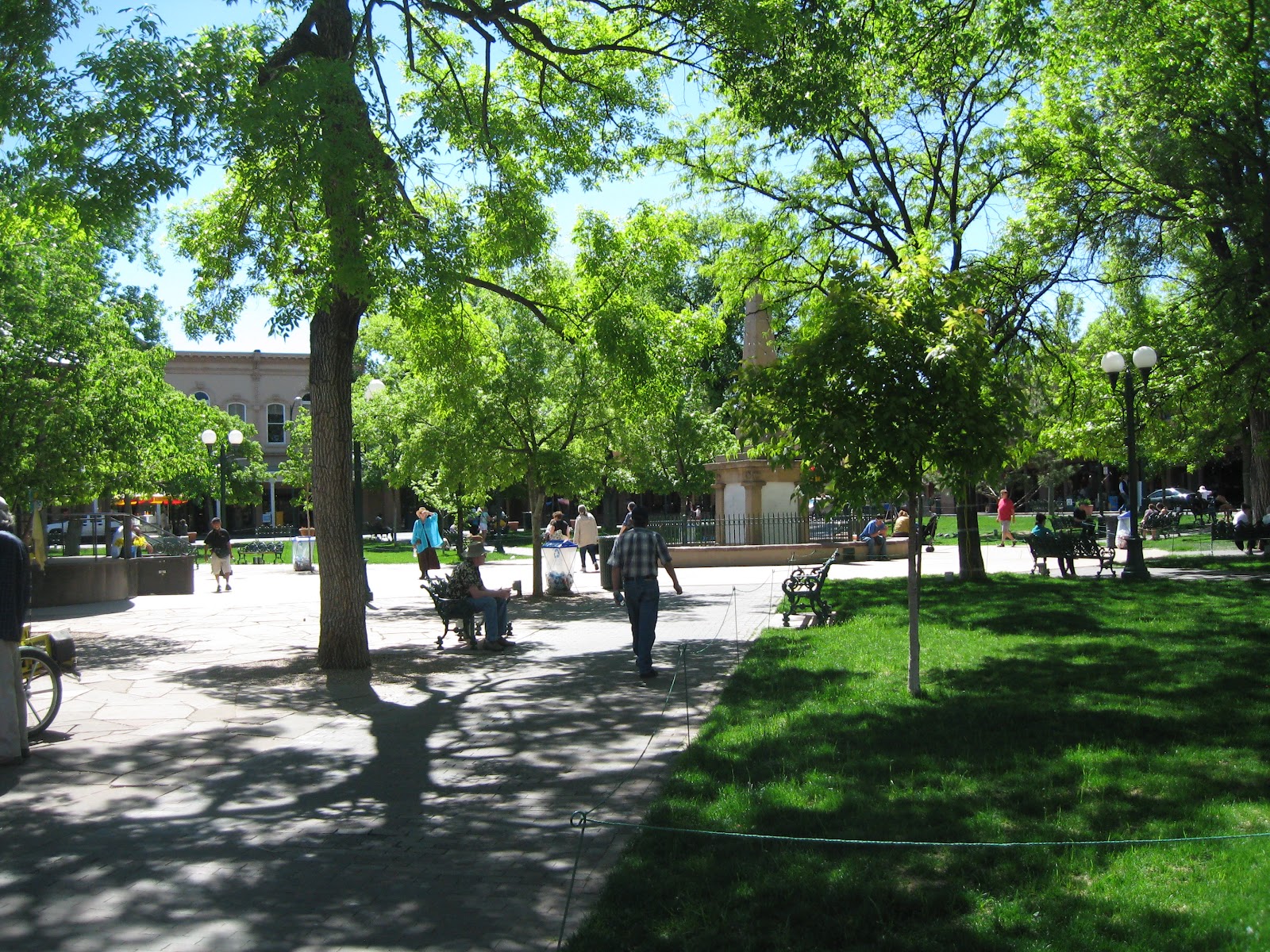
Rested and relaxed, we woke up on Saturday morning with a walking tour of downtown Santa Fe before us. And with food stops included, who could complain? Well, we could, it turns out, as someone forgot to inform the tour that Brooke had gluten issues. No matter, as our tour guide righted the ship, even if there was nothing to substitute for the last stop’s pizza. Meeting first at the plaza, we were treated to a panhandler in handcuffs – Santa Fe doesn’t mess around with the tourist trade – as well as a memorial to the “brave souls” who murdered hundreds of Indians so long ago. At least they scrubbed “savage” from the marble. Gathered together at last (one couple from the night before didn’t show, leading us to believe that perhaps we had poisoned someone after all), we heard the standard spiel about Santa Fe itself, and quickly strolled to the San Francisco Street Bar & Grill for a sesame chicken salad. It was a nice light start to an afternoon of gulping, but perhaps too light. A few bites later, it was gone. Brooke was given a cup of soup as a substitute, and it seemed she got the better deal. While the restaurant was “introduced” in a sense, it would have been nice to check out the kitchen, though we understand the time limitations. At least one of the sexy hostesses could have kissed me on the way out.
Next up, The Ore House (where we would dine later that evening, paying over $50 for some chips and a shrimp or two – overpriced, but tasty) where we were treated to a truly unique establishment (two floors of open, light-filled dining) and Florinda’s Posole, a spicy little number that has the decency to have been passed down from the chef’s grandmother. Jammed with pork and cilantro, it was the day’s highlight, with its inspired use of chiles a stomach-first window into the heart of New Mexico. Just around the corner was our next stop, an odd choice indeed: Santa Fe Olive Oil. Sure, it was our opportunity to sample real olive oil, rather than the cheap, bastardized version you’ll find in your average Safeway, but who knew it would damn near bring me to my knees in gut-churning disgust? I’ll say it, man – pure olive oil, even in small doses, without any accompanying bread or substance, is akin to kissing a toilet seat. I hated the experience, but was saved somewhat by the sample table of balsamic vinegars, which ran from coffee-flavored to any number of fruits. Those, I could drink. Raw olive oil, not so much. Sure, the good stuff might extend your life, but at what cost? Hell, I’d be spending most of my extra years on the shitter.
After reaping what the Corleone crime family hath wrought, we checked in with San Q Japanese Pub. An odd choice, it would seem, given the decided lack of Asian influence in the area, but this little number offered a Hatch green chile tempura roll that genuinely surprised me. The Japanese setting, complete with low tables where someone like me is bound to pull something vital, helped foster an instinctive mouth-watering, but upon learning that the sushi dish would be, well, fish-free, I was outraged to the point of needing to charge the tour guide like an angry bull. Using some discretion, however, I stayed put, and my initial close-mindedness was met by a tasty treat bursting with flavor. It seems one can do sushi right in the Land of Enchantment. Never knowing this place existed, even after a half-dozen visits to the area, we were now armed with a go-to joint for our raw fish obsessions. And me, the rarely ventured, nothing ever gained type, ate something that would have normally sent me packing. Something about having no options and a growling belly, perhaps.
As we made our final swing near the state capitol (uniquely designed, as is the entire town), we came upon Upper Crust Pizza and the Sunny Chicken Pesto offering. As stated, Brooke had to take a pass here, and I wish I had. Called “Santa Fe’s best slice of pizza,” it was, frankly, nothing of the kind. Perhaps it was just this variety, but I was unimpressed at best. Something tells me our pies were made hours before and left under a heat lamp as “tour offerings”, so maybe this first visit shouldn’t be the last. Still, if future customers are your goal, perhaps you shouldn’t send in the second unit. As if to counter the forgettable pizza, it was here where we met a fellow traveler – a Michigan native now residing in Dallas – who shared our passion for the parks. Here she was, relatively young (younger than us, at least), traveling by herself and seeing the country. At the very least, it was inspiring to meet a person with an NPS fixation who isn’t one step from the grave. There are so few of us, you know.

So we chatted and as we neared our final stop, Senor Murphy’s Candymaker, we passed by the world famous Loretto Chapel, where Jesus himself (or St. Joseph) is rumored to have built a “miraculous” spiral staircase in the late 19th century. Why Christ would wander into a U.S. territory to make life a little easier on the knees of virginal nuns is beyond me, what with the rampant disease, violence, and bigotry of the era, but we are talking about a religion whereby one feasts on a Triscuit to “ingest” the soul of a zombie savior, after all. And they called the native people savages. That aside, we wrapped up the walk with a little toffee sampling, which was more than enough to make me forgive the pizza.
As a side dish, our Santa Fe culinary extravaganza was just what we needed to remind our fevered brains that yes, a vacation is possible without 500-mile days and stamp-filled visitor centers. We ate, walked, talked, and took in a brilliant blue sky, all without buying a single magnet or checking a dog-eared unigrid. Sure, we’re still hooked and ready for more stamps, but how pleasant indeed to stay put; feet up, belts loosened, with the beauty of America’s oldest state capital unfurled before us like a ribbon of ecstasy. We can do this, and with so many NPS sites now out of reach for short trips, we’d better get used to the feeling. Funny thing about obsessions – they’re always there, right where you left them, happy to see your crazed expression once again.

Friday, March 30, 2012

Lone Star Colossus: Lyndon B. Johnson Nat'l Historical Park 3/25/12

When we last came to the LBJ Ranch in May of 2007, our obsession was not with passport ink or National Park sites, but rather the headstones of former presidents. Following our maniacal treks through the Civil War battlefields of the east, we moved along to executive gravesites and, at the time, Johnson’s final resting place in the Texas Hill Country was the final stop, save the sudden and last-minute inclusion of Gerald Ford’s Michigan slot. And since Lady Bird was still alive (though not for long), we did not have access to the Texas White House, a crucial part of the overall tour that was a shame to leave behind. Now, having graduated to the stamping fix and in the area for the San Antonio Missions, we simply had to visit the LBJ site once again. After all, was there not a new stamp to be had? And surely we had to replace the mail order sticker with an actual book impression, right? If anything, we just had to know if that crazy tram operator was still rambling to rube and tourist alike as she snaked around the ranch roads.
Due to predictable budget cuts, the LBJ National Historical Park tour has indeed changed, and no longer do tourists have to gather at the state park visitor center for a bus ride through the hills and valleys of the ranch. Folks are now on their own, aided by an audio CD for use in their own vehicle. The disc is helpful to be sure, and probably not much different than the live guide, though matters are dramatically helped by the inclusion of Johnson’s own voice throughout the brief interlude. It’s a restrained, somber Lyndon, though, reserving his commentary to matters of the landscape, rather than balls-out invective that all but gives you the Johnson treatment right through the stereo speakers. In some ways, the CD is part of what makes the LBJ ranch tour – though informative – not exactly what one might expect, given the subject at hand. Yes, Johnson was shaped and developed by the very land before us, but his gargantuan personality seems to have been put on hold, lest we run for our very lives. I get that no “official” site is going to present the man in full – the man arguably the most obnoxiously gifted politician in American history – but there’s little here of the cock-first bully so gloriously chronicled in Robert Caro’s still-unfinished chronicle. It’s like we’re coming home to the LBJ of his final years; where he put up his feet and let his hair grow long, with no chests left to poke, or bitter wars to be won.
Still, we made the full drive around the site once again, checking off the reconstructed birthplace, Junction school (where he returned with his teacher to sign the Elementary and Secondary Education Act), family cemetery (LBJ and Bird, together again), show barn, and hangar. It is at this last stop where the unfamiliar part of the tour began for us, and how wonderful to be greeted first by “Air Force One-Half”, a Lockheed JetStar that had been rotting away in an Arizona desert, all but forgotten to history. Newly restored, it’s a genuine treat, and it answers the question of how LBJ got to his ranch when it was clear that the site’s runway could never handle the jumbo-sized Air Force One. A short distance from the plane’s resting place is the hangar, which has been recently converted to an additional visitor center, and the launching pad for all tours of the Johnson home. The displays in the hangar are few, but there’s a movie to be had, as well as a new stamp for the faithful. Visitors can also get an up-close and personal look at a few of LBJ’s cars, which had previously been behind glass. On this day, house tours were running every twenty minutes or so, and the crowds were growing by the minute. As much of the house had only been opened to the public in December 2011, there was palpable excitement, certainly on our end.
Given that this was a frenzied Sunday, we knew our tour would be rushed, but getting inside was enough, and what better place to start than LBJ’s “Oval Office”? Restored with pinpoint accuracy, thanks to numerous photos, we had to quickly catch our glances as we were pushed aside, but not before we saw a wad of “Johnson bills” near a desk. Now there’s the LBJ we know and love – replacing Washington’s face with his own, likely to allow for souvenirs that could supplement the ever-present bronze busts (which he had mass-produced to hand out as “gifts”). Next up, we glimpsed the dated kitchen, the dining area, and yes, even a bathroom, with a wall phone right next to the toilet. No telling if the shower retained the legendary Lyndon shower head, which was said to exert the water pressure of a fire hose. The closet was a particular treat, what with the dozens of monogrammed LBJ shirts and suits. It’s an impressive collection to be sure. The next to last room, Johnson’s bedroom, is the most historically important, and consider me tickled for being able to stand right next to the bed where he suffered his final, fatal heart attack back in January 1973. Listen closely for the charming anecdote about the room’s massage table, and yes, there’s even a rug that was a gift from the Shah of Iran. It’s not often one gets to stand in the very room where a president has died, and at last, I felt the circle close for this second ranch visit. Lady Bird’s bedroom is right next door, and according to the guide, its appearance – a bit garish for modern tastes – was left exactly this way, right up until her death.
All but pushed out the side door, visitors can observe the pool, a spot, no doubt, for late nights of aggressive skinny dipping, as well as strategic bull sessions. LBJ was, above all, the most political of animals, and from all accounts, he never turned it off. He simply had no other interests. He read little and was certainly no intellectual, but few human beings understood human nature more, and his mastery at the game had no rivals. Curiously, the home is, all things considered, rather modest, and it speaks well of Johnson that he had no real interest in living like a sultan. It is said that his upbringing in poverty motivated most of his future political positions, perhaps including his marriage to a woman of relative means. Here and there, the site reflects the president of staggering achievements – Civil Rights Act, Voting Rights Act, Medicare, Medicaid, federal funding to education, environmental and arts funding – but at bottom, this is a personal stop; a retreat into the man, rather than the myth. Needless to say, there’s also precious little concerning the all-consuming madhouse of Vietnam, or even the race riots that defined Johnson’s final years in office. But who needs it when we have the amphibious vehicle where Johnson scared the crap out of visitors by pretending to have lost the brakes while driving into the river? We can practically see Lyndon himself raise a glass of Cutty Sark to his own cruel sense of fun. The current manifestation of the presidency has rarely felt so small by comparison.


FINAL RATING

9/10

Thursday, March 29, 2012

Forget the Alamo: San Antonio Missions Nat'l Historical Park 3/26/12

There is an understandable temptation to reduce the whole of one’s San Antonio encounter to the Alamo. It is, after all, the most mythologized structure in the entire United States, so defining the American frontier experience that it has become inextricable from a catchphrase now synonymous with never-say-die courage, patriotism, and rugged masculinity. We remember it, lest we descend into the sort of barbarism that took so many heroic lives those many years ago. It matters little that few laymen even bother to understand what really took place there, or the context in which it was “defended”, as so many of us are now content to be blinded by the girth of Texas itself, and what it means to our very identity. Conveniently, we’ve also stripped that doomed cause of its essentials – the system of slavery that drove the Lone Star State’s quest for independence in the first place being foremost among them – focusing instead on the coonskin caps, one-dimensionality, and flag-waving bluster that so often substitute for actual historical analysis. The legend, naturally, long ago supplanted fact. No mere half-finished mission, the Alamo has become that bulwark of our very exceptionalism; one of a few choice locations where, in essence, we came to be.
No matter that the building itself is a mere pipsqueak of inflated glory; a humble mass of reconstructed mortar now dwarfed by the very commercialism it claims to oppose. Blink hard and you’ll miss it, and depending on the crowds, you just might skip it altogether in favor of the cheesy museums and tourist traps that threaten to reduce the whole thing to irrelevance. But there it is, surrounded by teeming hordes who, by this point, take its supremacy on faith, and were it not for the ubiquity of its narrative power, it’s likely few would care to stop for the moment it takes to snap a picture. That it remains iconic is beyond dispute, but at this point in its long shelf life as one of our nation’s historical must-sees, there’s no real reason to visit save the fact that someone, somewhere decrees that we must. There’s an odd charm to the surroundings, given that it appears the Alamo has been dropped from above by a cheeky god, smack in the middle of irreparable kitsch. But the real beauty lies elsewhere. Yes, the Alamo, is, technically, part of the full mission experience, but rather than turn the damn thing over to the National Park Service, the favorite son remains an enterprise of the Daughters of the Republic of Texas, if only to ensure that no actual historians or fact-finders get in the way of a good story. And, well, to foster the belief that against the odds and an endless paper trail, Texas never actually signed on to the whole United States of America thing.

But if you have any interest in the particulars of what Texas really means to our national life, leave the Alamo behind and hit the four missions included in the NPS-protected San Antonio Missions National Historical Park. Sure, all four do not reach a level of pristine detachment so consciously avoided by the Alamo, but at their core, they remain committed to a living history that dares to intrude on a sense of mindless celebration. In essence, the four 18th century Franciscan missions along the San Antonio River – Concepcion, San Jose, San Juan, and Espada – are a rebuke to glory; they stand as a reminder that so much of our country was founded as a means by which to impose our muscular will. In this case, to offer starving and frightened Native peoples shelter and food in exchange for their very souls. Yes, the Missions were about conversion and domination, so afflicting the assorted tribes of the area that they “gladly” surrendered their customs, habits, and rituals in order to avoid dying, often terribly. So in this way, I agree with those who choose to highlight the religious nature of America’s birth, as long as they sign on to the blood-soaked reality. Spaniards wanted gold, guns, and glory, but above all, they wanted to prove their superiority again and again, primarily by establishing these godly fortresses to their vengeful deity. Thankfully, the Spanish forces supported beautiful architecture along with their more sinister aims.
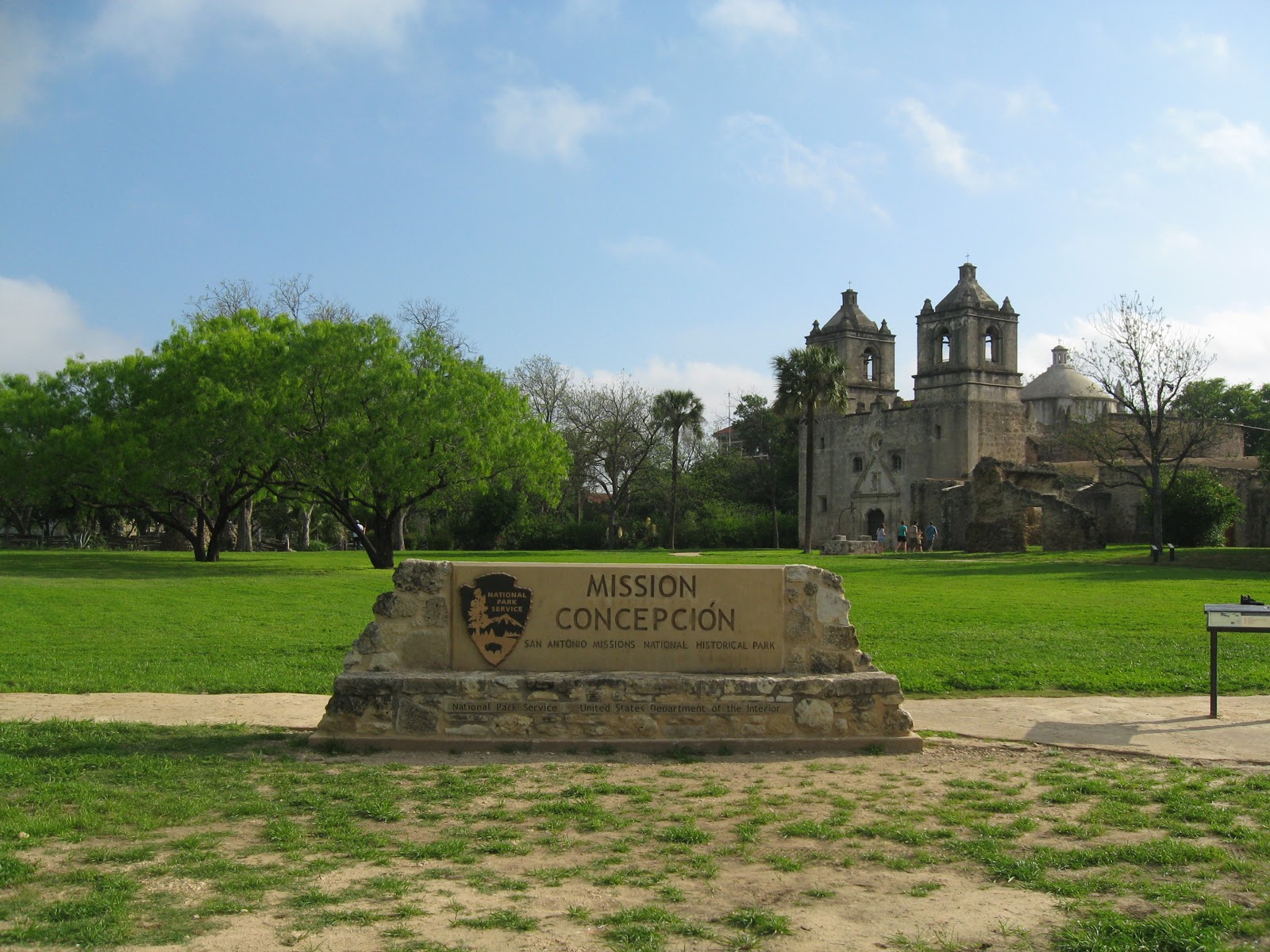
The first stop, Mission Concepcion, is the best preserved of the lot, looking much as it did in 1731. As with all the others, it remains a working church, a fact that might appear odd given its government support and protection. In this case, however, the “living” feel actually enhances the experience, cloaking the buildings with a warmth that an otherwise static building could not possibly convey. People lived here, yes, but by god, they still do. To remain open for business, so to speak, brings history into the present, even if the ultimate goal has shifted slightly. God is still front and center, but he’s less inclined to kill you with smallpox. Many of the original interior paintings remain at Concepcion, and subsequent restorative work has revealed a beautiful array of frescos. Spanish and Moorish architecture dominate, and the grounds are isolated enough to provide a sense of privacy and removal. Again, say what you will about the Spanish army that invaded the continent, at least their religiously inclined could appreciate fine art and striking décor. There was a nobility and intellectual sense to their standards, unlike the modern push for sameness and generalized hostility. Then, one could paint and worship. Now, the prayer comes with little else but an insistence on laziness and willful ignorance. The Franciscans were ultimately evil, but they came armed with what passed for the science of their day.
Mission San Jose is the centerpiece of the tour and as such, the most crowded. Its visitor center has the most by way of displays and education (the film is a lesson on how the current Tejano culture came to be via the initial Spanish and Indian conflict), and the grounds themselves the most involved and striking to behold. Much is reconstructed here, but the NPS has done a wonderful job of seamlessly evoking the past while remaining true to our modern need to understand. San Jose, founded in 1720, was a major social center in its day, and the expansive central compound is a testament to that fact. The walk is relaxing and eye-catching, and along the perimeter stand the residential “homes” that, while humble, were likely preferable to the naked exposure outside the walls. Trees, flowers, and bold greenery dominate every corner of the facility, while the church itself practically envelops the sky. Along the walls (where they once stored grain), there is an interactive display from 1968 that, shockingly, rises above its dated trappings to provide a full view of life at the mission. We see that the Natives were treated like children, of course, handed meager rations for their quiet obedience, but without this little mock-up, it would be that much more difficult to picture a “day in the life.” San Jose’s main edifice also comes with its own built-in legend – the “Rose Window” – from which some say a broken hearted man pined for the mail order wife who never arrived. Romantic to some, but tempered somewhat by the reality that any such wife would, upon arrival, be treated as indistinguishable from the baskets of grain.
Mission San Juan, an even more remote locale, came to be in 1731, and is now undergoing a bit of reconstruction. The presence of scaffolding and work crews hinder the visitor’s desire to be transported to the past, but the mission remains stunning in its own way, even if the grounds are far less imposing than those of San Jose (and there’s no access to the actual church). As a way to distract from the imposition of modernity, a black cat wandered the lush landscape, proving that for all of their detachment from the real world, Catholics can still dress up a place with beauty and beast alike. One will spend the least amount of time here, that is, until construction is complete, and I’m still not sure where the visitor facilities were. There’s a nature trail in the back, but as we couldn’t see where the hell it led, we refrained from getting lost in the brambles.
The four-stop tour wraps up with Mission Espada, established at river’s edge in 1731 after being moved from its original locale. It’s easily the most removed of the sites, even if our walk along the perimeter was interrupted by the blast of Guns n’ Roses coming from a nearby food stand. Still, the landscaping is a genuine treat, and the flowers pop from the ground with brilliant color. It’s a quiet, reflective section of the park, and as Brooke told me later, its small visitor center taught her more about spurs than she ever cared to know. While I missed that reluctant education due to being obsessed with getting the proper passport book stamped with the proper stamp, my focus allowed us to get the San Juan picture stamp that was nowhere to be found at the actual site. Thankfully, clearer heads realized it was best moved from the construction zone to Espada’s facilities. Once again, a cheerfully plump cat roamed the grounds, and while the church was open to the public, it was much smaller and less imposing than the first two sites. Still, kudos to the godly man or woman who saw fit to empty out a sweet tea container in order to house the group’s holy water. Perhaps it was the same wry fellow who placed a battered rope in front of the altar, insisting that to cross it was forbidden, due to the “sacred” elements behind it. As always, however, the architecture leaves a visitor breathless, as well as with the unavoidable conclusion that with this historical park, the NPS got it just right, even if the original inhabitants of the missions rarely did.


FINAL RATING


9/10